Wednesday, 23 March 2011

RESEARCH: Target Audience Research - Survey

In order to collect information about audience likes and dislikes, I created a survey on surveymonkey.com
Here is the survey.


In the survey, we asked the following questions:


  1. Do you enjoy watching horror films?
  2. What was the title of the last horror film you watched?
  3. Who is your favourite horror monster?
  4. Are there any horror directors/writers/producers that you are a particular fan of?
  5. Who makes the best horror films?
  6. Is there anything else you would like to add concerning horror films and what you like/dislike about them


82.6% of the audience answered that they enjoyed watching horror films, which immediately meant good news for our film.
Not so good news was that no one chose werewolves as their favourite character, compared to the 43.5% that favoured Serial Killers and Psychos.
The British horror industry was most popular with 40.9%, followed by America, Asia, then Europe.

At the end of the survey, I asked the audience whether they had any comments on the production of horror films. These two particular comments stood out:

"I think horror films have to be gritty and at least an 18 rating. I don't think you can properly scare anyone if you have to remove swearing and dumb down the horror."
"They are just too boring these days ... We've moved on from horrors now ... They're boring."


 We posted the link of the survey on Facebook:


PLANNING: Storyboard


PLANNING: Film Brief and Director's Pitch


Main task: the titles and opening of a new fiction film, to last a maximum
of two minutes.

All video and audio material must be original, produced
by the candidate(s), with the exception of music or audio effects from a
copyright-free source. Both preliminary and main tasks may be done individually
or as a group. Maximum four members to a group. 


The opening two minutes of a werewolf movie. A teenage couple drive to a secluded spot for a romantic evening. Using the Bus Technique, a Farmer interrupts, but then he is attacked by the werewolf. Shot in the style of a low budget B-movie, the audience doesn’t see the werewolf, but it’s introduced through Point Of View shots.

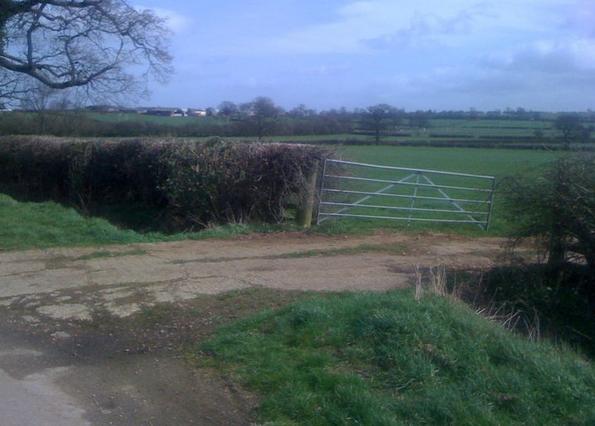
My group and I intend to shoot on location near Kilsby. (see photos below)
We need to consider lighting, as it will be a night shoot. Our initial plan is to work with the car’s headlights, camping lanterns and external torches


We devised a list of props and equipment that we may need during filming:


We need to obtain permission to use the song 'monster' by a band called The Automatic. This song is rather in-keeping with the movie because it is they type of music that teenagers would listen to in their cars. As a group we came to the decision that the song would work very well with the motion picture. We decided to compose the following email to be sent to the record company in order to obtain permission for the use of the song.


RESEARCH: Movie Deconstruction - Toy Story 2

Title: Toy Story 2
Director: John Lasseter
Co-Directors: Ash Brannon and Lee Unkrich
Year of Release: 1999
Genre: Animation

The scene begins in space, where all that can be seen is distant stars. Then, the words “Gamma Quadrant, Sector 4” appear on the screen. These words appear to be written in a Sci-Fi/military theme, which suggests there will be an element of action in the following moments. When the text disappears, we see what is thought to be an asteroid, hurtling through space towards a planet. In the next shot, we realise it is in fact Buzz Lightyear flying towards the planet at a great speed. As he approaches the planet, upbeat orchestral music begins and builds to a crescendo, at the same time, the glow of colours around him intensify. This suggests that he is a heroic character.  In actual fact, the glowing is caused by the intense heat from the planet’s atmosphere. The fact that this character can withstand such temperatures shows that he possesses considerable strength and resilience.  After infiltrating the planet’s atmosphere, he soon reaches the surface where he activates his wings and rockets. We see Buzz flying dangerously close to the uneven ground, narrowly dodging the sides of a narrow ravine and other obstructing rocks. There is a great use of Point of View (POV) shots in this sequence. We see the action through the eyes of the character, which is quite thrilling for the audience as he is travelling at immense speeds and executing expert aerobatics.  All the other external shots of the character show him relatively central on the screen. These central shots, along with the Point of View shots tell the audience that this scene will revolve around him.
We then see Buzz landing gracefully in a crater on the planet’s surface. The graceful landing further enhances the fact that Buzz Lightyear is a character of considerable skill. In the next Point of View shot, we see the reflection of Buzz’s face in his visor, again reinforcing the point that the scene is focussed on him. The sound of heavy breathing increases tension and adds a sense of mystery in the scene. Buzz then starts taking his Mission Log, which gives the audience further knowledge of what he is doing. He says “All signs point to this planet as the location of Zurg’s fortress.” He then goes on to say, “but there seems to be no sign of intelligent life anywhere.” As he says this, red dots appear all over him, suggesting he is being targeted by many enemies. He looks up to see him surrounded by thousands of robots aiming lasers at him. This irony adds to the comedic value of the film, even more so by the fact Buzz was not wrong when he said there was no sign of intelligent life, as the robots are computerised machines. The audience sees Buzz think for a split second, then jump into action as he dives and fires his laser at a crystal deposit in the ground, this refracts his laser in many directions, thus destroying all the robots in near perfect symmetry.  As the robots are destroyed, the explosion creates a mass of green smoke. We see Buzz flying upwards as a result of the explosion and crashes to the ground a short distance away from the blast zone. This shows that Buzz, although extremely skilful, is not perfect. He narrowly avoids getting crushed by falling debris and takes cover by some rocks, then a camera-like robot emerges from a hidden flap in the rock next to Buzz. The camera looks from left to right, then focuses on Buzz.  As soon as the camera gets a glimpse of him, there is a look of terror and panic in the camera’s expression. Although the camera doesn’t have a face as such, the lens widens and a satellite dish-like object on top of the camera spins quickly. This is a form of personification, as the animators have given emotion to a computerised object, again adding to the comedic value of the production. Buzz then jumps in front of the camera robot and shoots it with his laser. All that is left of this robot now is the jointed arm it was attached to, which soon retracts back into the hole in the rock in a comedic manner.

RESEARCH: Movie Deconstruction - Harry Potter and the Goblet of Fire

Title: Harry Potter and the Goblet of Fire
Director: Mike Newall
Year of Release: 2005
Genre: Fantasy

The movie begins with tense orchestral music which builds to a crescendo as the camera focuses on the ‘Warner Bros. Pictures’ logo. The camera zooms into and passes through the ‘Warner Bros.’ Logo to show a wall made of skulls. As the camera vertically pans down the wall, we see a snake emerging from the mouth of one of the skulls and slithering up a grassy path in a dark, misty graveyard.  The skulls along with the misty graveyard emit a sense of death and the snake itself could represent evil. This is because in the Bible, Satan takes the form of a serpent in order to persuade Eve to disobey God’s orders and eat the forbidden fruit. As the snake progresses through the graveyard, it reaches a tomb accompanied by a statue of the Grim Reaper. The serpent slithers up the tomb and in the meantime the camera approaches the statue and vertically pans upward to give the impression that the Reaper is imposing itself on the viewers, again, supporting the sense of death in the scene.
The next shot is an establishing shot of a small cottage in the foreground, and a large mansion in the background.  The mansion appears to be enshrouded by mist, which suggests it may be involved in sinister goings on. Up to this point, the setting seems to be quiet and uninhabited; however, a light suddenly appears in the upstairs window of the cottage, suggesting that we are likely to encounter the first human character in the film.  The first we see of this character is of them striking a match over a stove, with an intension of boiling the kettle.  After he puts the kettle on the stove the man steps back and stretches out his arms and fingers. This signifies that his arms could be stiff as a result of arthritis. The man is distracted from making tea when he looks out the window and double-takes to see a flickering light through one of the upstairs windows of the mansion. He throws the teabag down in anger and mumbles “bloody kids” as he walks off to investigate. His reaction to seeing the flickering light may imply that he has either had trouble with local youths trespassing in the mansion previously, or he has a stereotypical view of young people, and instantly accuses them of being the culprits.  He picks up a set of keys from a hook, which could suggest he is some form of caretaker or grounds keeper of the mansion. It has now become obvious that the mansion is probably derelict, as if it were inhabited, the man would not find it unusual for a light to be flickering from one of the rooms.
We then see the old man walking through the gardens towards the mansion. He looks uneasy as he walks, reinforcing the possibility of him being arthritic and finding movement a chore. The man walks up the stone steps and approaches the door to the mansion, finding it unlocked, which further arouses his suspicion that there are intruders inside. He slowly crosses the threshold, to see the hallway ridden with cobwebs and dust, which supports the viewers’ suspicion of the mansion being derelict.

RESEARCH: Movie Deconstruction - Hot Fuzz

Title: Hot Fuzz
Director: Edgar Wright
Year of Release: 2007
Genre: Action Comedy

The film begins with the sounds of many different types of police siren and the ‘Universal Studios’ animation, followed by the ‘Working Title’ Production Logo. The sirens denote that the film will be based largely on the police service, although at this point, the audience is still unclear as to what genre the film will be.
       The first clip is a long shot of a person walking down a dimly lit corridor in a fairly modern building (possibly a police station). The person is walking quickly, with heavy footsteps, which could imply that he is in a hurry. As he walks closer toward the camera, the camera slowly and gradually zooms in, focussing on the subject. When the character gets closer, we can see that he is wearing a police uniform, which supports the idea of the film involving the police service. As the police officer becomes in clear visible range, he takes off his hat and holds his warrant card up to the camera, thus establishing character and role. There is a slight element of humour in this action as the character’s facial expression is exactly the same as of that on the photo on the warrant card. This is the first signal that the film is in the comedy genre.

       Next, there is a montage of clips along with a narration about the character’s background, including his qualifications, training and career. Early on in the montage, there is a close-up of the main character’s right shoulder, showing one of his epaulettes with the number 777 on. The number 777 is often thought to be the number of God. As opposed to 666 being the number of the Devil. This could denote that he is a ‘god-like’ person. The transitions between shots are heavily emphasised by the use of quick, bright flashes and loud ‘whooshing’ noises. This may create a sense of urgency and importance about the montage.